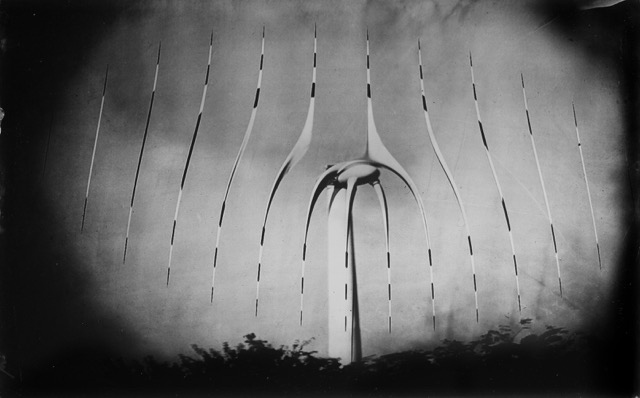
Varga Tamás
Even as a child, I believed that creating something good and genuine is no simple task—it requires hard work over a long period. Today, as a photographer, I hold the very same belief. My interest centers on historical processes, yet I do not wish to follow the path of mere archaism; instead, I strive to exploit the uniqueness of these images through a fresh, contemporary perspective, frequently blending the process with digital imaging.
Since 2004, they have participated in 19 solo and more than 150 group exhibitions both in Hungary and abroad. Among the most notable venues and events are the Mai Manó House (on multiple occasions), the Esztergom Photographic Biennales, press photo exhibitions, exhibitions organized by the National Association of Hungarian Creative Artists (MAOE), numerous fine art reviews, Falkart Gallery, Artphoto Gallery, TOBE Gallery, Kolta Gallery, MODEM, Várkert Bazár, Kiscelli Museum, Vasarely Museum, Art Market, and various international locations including Spain, Canada, the USA, and China.
Their photographs have appeared in numerous art, photography, literary, and other publications, as well as in albums, catalogs, and calendars, and they have authored articles on the subject of photography. Since 2019, they have published five individual photo albums.
They are a member of the Association of Hungarian Photographers and the National Association of Hungarian Creative Artists (MAOE).
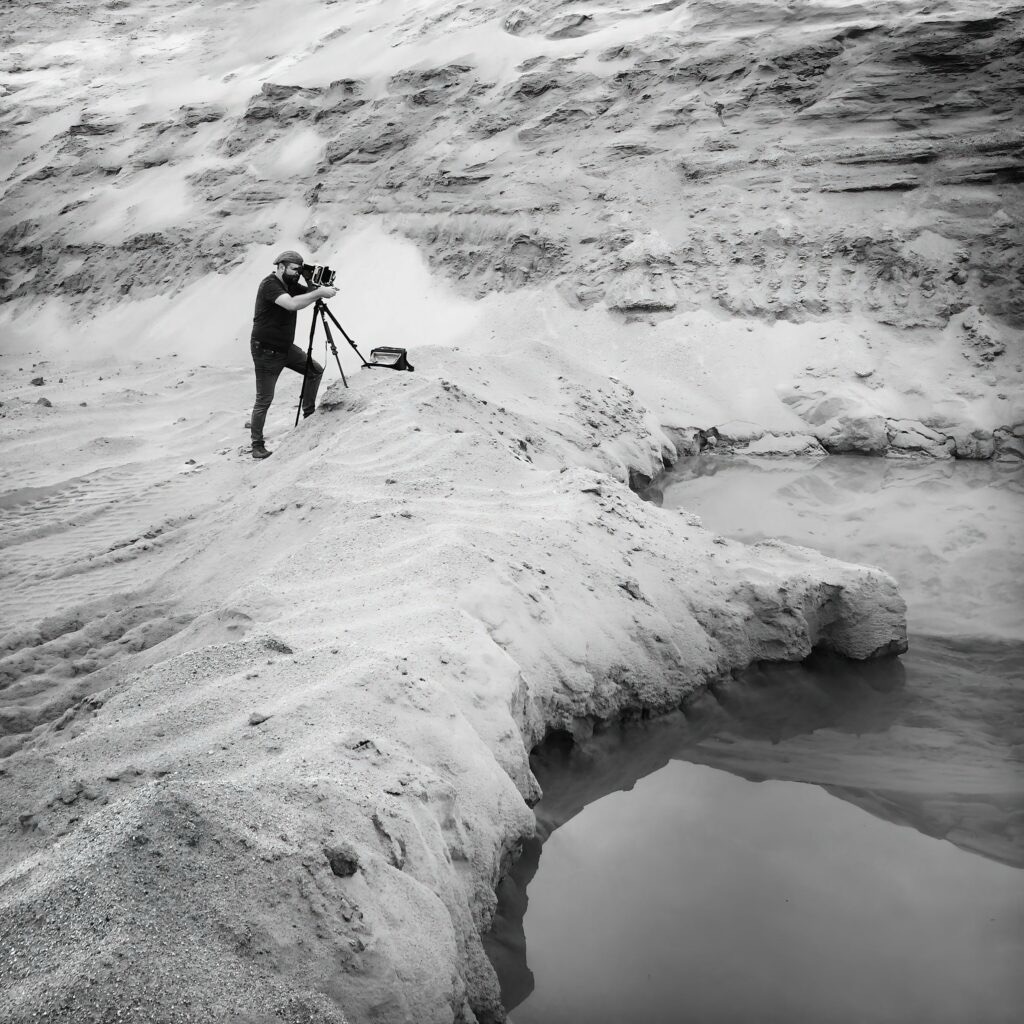
Time Pixels
The images attempt to ‘make time visible.’ A new construct emerges, questioning reality and bringing virtuality to the forefront.
Space is transformed; both the visual world and the narrative are rendered in a different way. These photographs uniquely capture the events of a 30 to 90-second video recording within a single still image.
The starting point for these works is a moving film, which is processed based on the principle of a theoretical slit camera. The image is reconstructed after decomposing the video into individual frames, and those frames into pixels.
The final presentation of the images is executed as wet plate collodion. This technique—requiring the image to be fully completed then and there—strengthens the sense of ‘here and now’ and underscores the ‘false document’ nature of the photograph.